Two days in Cluj: shaping the ICARE participatory framework
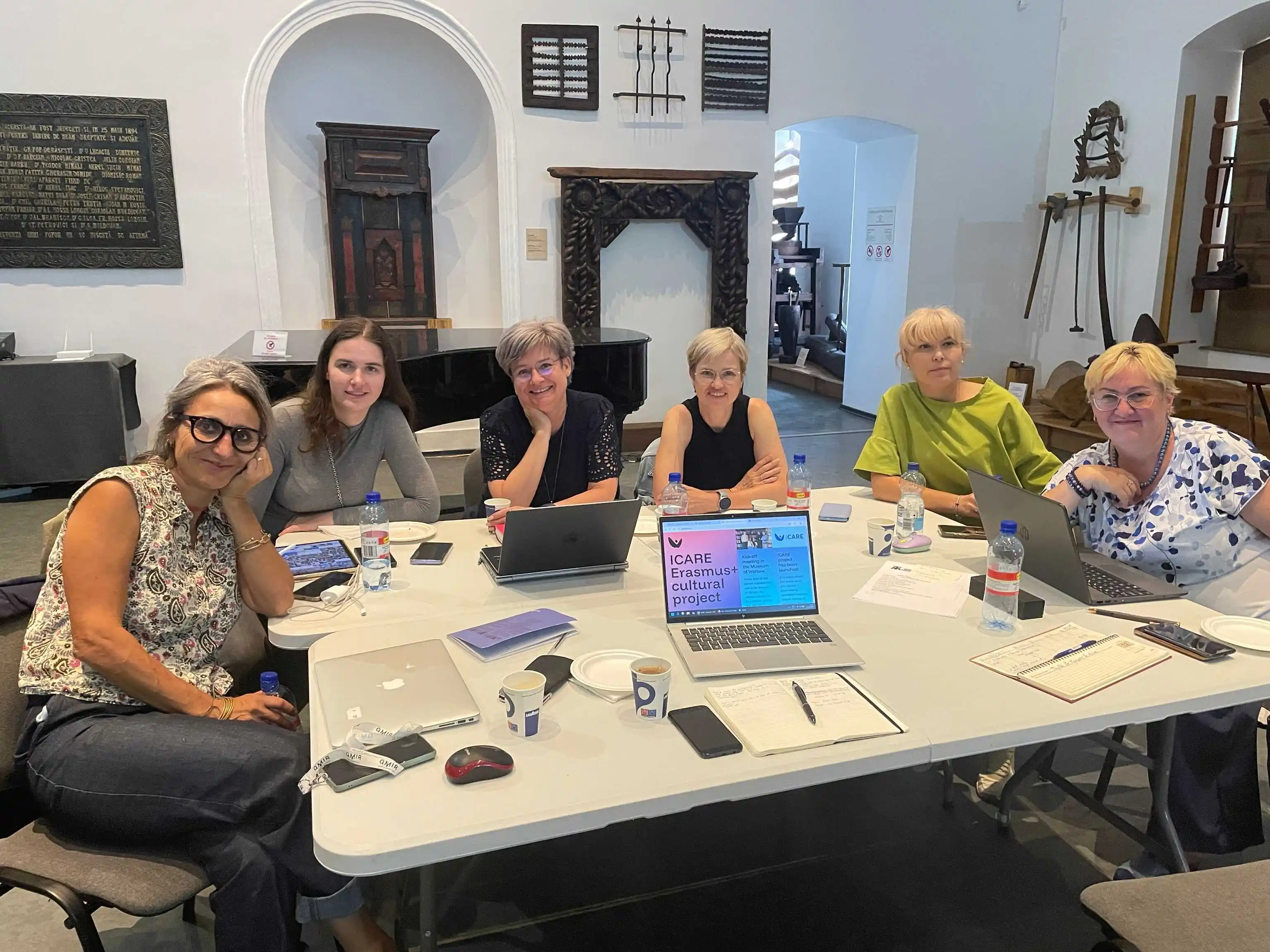
On 13–14 July 2026, the ICARE partners gathered in Cluj-Napoca, Romania, for the project’s second transnational meeting. Hosted by the Transylvanian Museum of Ethnography and welcomed by its director, Tudor Sălăgean and project manager Andreea Iasko, the meeting marked an important milestone in developing the project’s educational approach.
The two-day programme focused on Work Package 2, which is dedicated to building the ICARE participatory framework, the educational model that will underpin all future project activities. Led by the project coordinator, Katarzyna Žák-Caplot, the partners worked together to refine the framework’s structure, discuss its theoretical foundations, and agree on the next stages of its development. By the end of the meeting, responsibilities for writing, reviewing and finalising the framework had been clearly divided among the consortium.
One of the central themes of the discussions was participation itself. How can educational projects move beyond traditional roles of educators and learners? How can adults with migrant experience become genuine partners in creating knowledge rather than simply participants in activities?
These questions lie at the heart of ICARE. Whether the project takes place in a museum, library, cultural centre or community space, the aim is the same: to create learning environments where adults with migrant backgrounds actively shape the process through their own experiences, perspectives and creativity. The participatory framework currently under development will provide practical guidance for putting these principles into action.
Alongside the research discussions, the partners also reviewed the overall progress of the project, planned upcoming international meetings and coordinated preparations for future activities, including the Art Camp to be held in Warsaw in spring 2027. Communication coordinator Šárka Paličková reflected on the project’s communication activities, including the development of the website, social media outreach and plans for the coming months.
The meeting concluded with a visit to the opening of the photography exhibition About the People and Horses of Moravian Wallachia by Czech photographer Josef Vrážel. The exhibition explores the relationship between people and horses through black-and-white photographs documenting everyday life, traditional work and local customs in Moravian Wallachia.
The venue gave the exhibition an additional layer of meaning. The historical region of Moravian Wallachia traces its name and part of its heritage to the migration of Vlach shepherds, who travelled along the Carpathian Mountains from the territory of present-day Romania centuries ago. Adapted for Romanian audiences with translated exhibition panels, the exhibition itself became a small example of cultural exchange across borders, an idea that resonates strongly with the aims of ICARE and the broader Erasmus+ programme.
Photos from the transnational meeting are available here.
As the consortium moves into the next stage of the project, the work carried out in Cluj provides the foundations for the participatory activities that will follow. The framework taking shape now will soon be tested and further developed together with adults with migrant backgrounds across the partner countries.