Kick-off meeting in the Museum of Warsaw
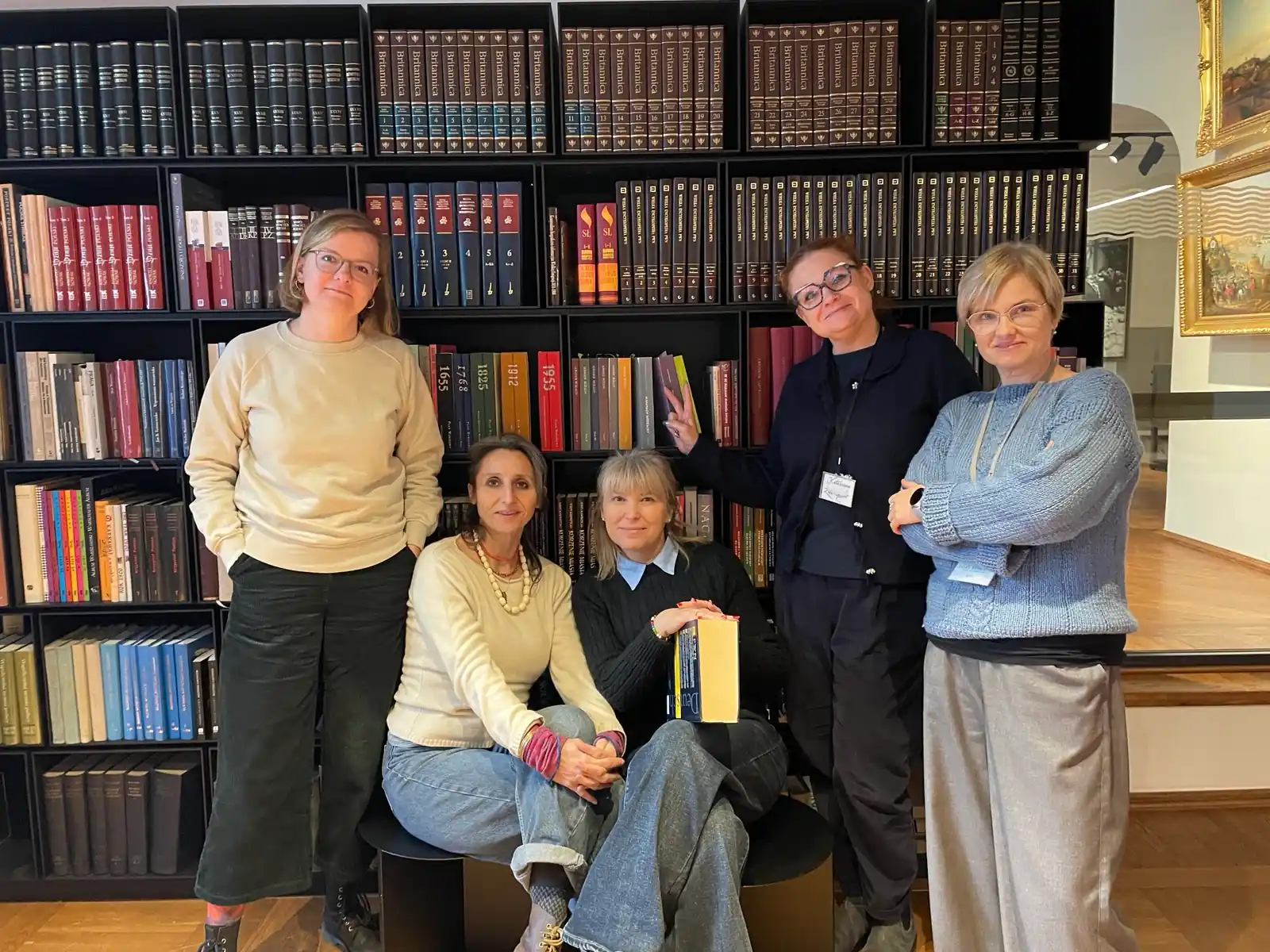
On 19-20th January 2026, teams from all four partner organisations met at the Museum of Warsaw, the project’s coordinator, for a kick-off meeting that officially launched the ICARE project: I Connect, Appreciate, Reinterpret, and Engage. Migrant Participatory Project Learning Through Reinterpretation of European Cultural Heritage.
The consortium builds on an existing, and well-tested collaboration: the European PILLOT project, in which the same partners connected language and cultural education for adults with refugee and migrant backgrounds using CLIL and integrated learning approaches.
The programme took place over both days in the Museum of Warsaw Library and covered the coordination and management foundations of the partnership: a detailed work schedule, financial management, and monitoring and evaluation. Considerable attention went to communication, promotion and outreach to the project’s target groups, people with migrant experience, educators, and cultural, artistic and community workers and experts. How to reach audiences and participants, and how to achieve engagement as diverse as possible, ran through the whole meeting; it is a question the entire implementation of ICARE depends on.
On Monday 19th of January, the team was warmly welcomed by Anna Duńczyk-Szulc, Deputy Director of the Museum of Warsaw for Collections and Development, whose support provided the professional and institutional foundation for the partners’ first joint project, PILLOT. She shared the museum’s experience with participatory exhibitions created with older adults and families, and its current plans to invite the public, through an open call, to inquire collaboratively into the phenomenon of Warsaw on the occasion of the museum’s 90th anniversary.
The kick-off meeting was led by the ICARE project coordinator, Katarzyna Žák-Caplot. Also in attendance were Monika Michałek, an educator at the Museum of Warsaw; Šárka Paličková, a coordinator at Centrum demokratického vzdělávání; Andreea Iasko, a manager at the Transylvanian Museum of Ethnography; and Chiara Damiani, representing the Education Section of Stazione Utopia.
The substantive agenda focused on planning the theoretical and practical research that all partner countries will carry out under one theme: the development of a theoretical framework for participatory adult education in cultural institutions. The partners will conduct theoretical research along four strands: cultural mediation and translanguaging; participation and community engagement; the project-based method; and educators’ competences. This will provide common ground: shared definitions, resources and a joint vision of the participatory model that will guide the local participatory cultural learning projects in 2027 and 2028.
Alongside this, all organisations will conduct practical qualitative research using semi-structured interviews and focus groups with people from migrant backgrounds, as well as with educators and representatives of cultural and educational institutions. During the kick-off meeting, a draft questionnaire structure was agreed for both educators and learners, with the aim of mapping the current state of participatory interventions in the four countries and capturing local conclusions and contexts. This will make it possible to compare challenges, needs and best practices across different regions and to develop a coordinated, high-quality approach at the European level. The result should be a tailor-made model of a participatory project that educators and coordinators will use throughout ICARE.
The meeting was enriched by visits to two branches of the Museum of Warsaw, chosen to show the museum’s practice in participatory cultural projects and democratic heritage. At Korczakianum, dedicated to the legacy of Janusz Korczak (writer, doctor, pedagogue and social activist), curator and researcher Marta Ciesielska showed the team how the space carries Korczak’s democratic legacy, above all his way of treating children as full members of a community. At the Praga Museum of Warsaw, the group met curator Małgorzata Czekajło, who ideated and coordinated the participatory process behind the temporary exhibition “Collections. Being Among Things”, created together with local residents, community co-curators and collectors, and reflected with the team on the project’s concept and realisation.
The kick-off meeting was effective, outlined specific next steps, and brought the ICARE project from the proposal stage into the real environment.